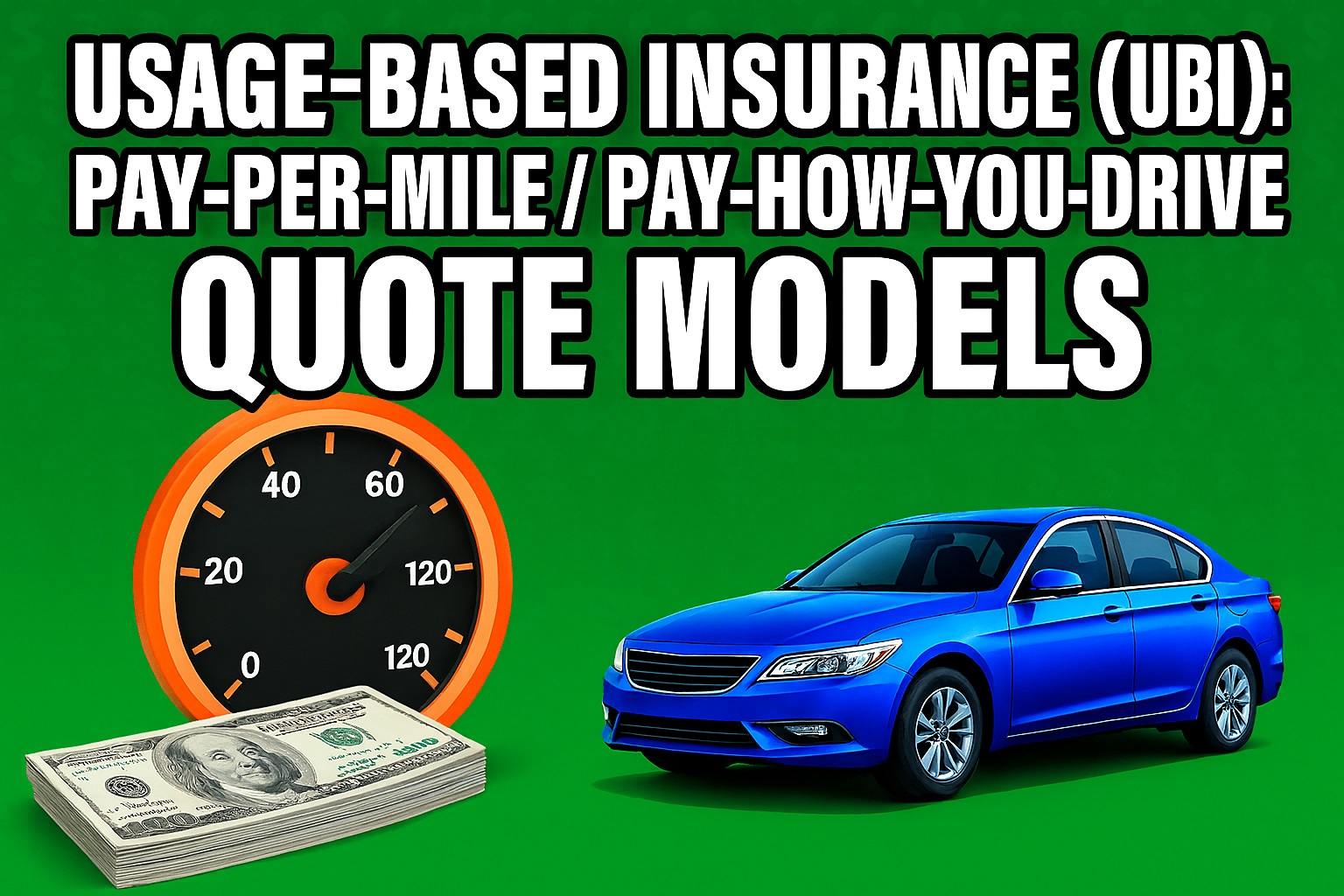
In 2025, the auto insurance landscape is rapidly shifting from traditional fixed premiums to dynamic, behavior-based pricing models. Usage-Based Insurance (UBI) represents one of the most significant innovations, offering personalized rates that reflect how much you drive and how safely you operate your vehicle.
With over 40% of auto insurers now offering UBI programs, understanding these models has become essential for consumers looking to optimize their insurance costs while maintaining adequate coverage.
What is Usage-Based Insurance?
Usage-Based Insurance (UBI) is an auto insurance model that determines premiums based on actual driving behavior and mileage rather than traditional factors like age, gender, or credit score. These programs use telematics technology—either through mobile apps or installed devices—to monitor driving patterns and calculate personalized insurance rates.
Pay-Per-Mile Insurance: Paying for What You Use
Pay-Per-Mile insurance is the simplest form of UBI, where premiums are directly tied to the number of miles driven. This model typically consists of two components:
- Base rate: A fixed monthly fee that covers the vehicle while parked
- Per-mile rate: A small charge for each mile driven
This model is particularly beneficial for low-mileage drivers, including those who work from home, use public transportation frequently, or own multiple vehicles with limited usage.
Pay-Per-Mile Savings Calculator
Estimate your potential savings with pay-per-mile insurance
Pay-How-You-Drive: Rewarding Safe Behavior
Pay-How-You-Drive (PHYD) models focus on driving quality rather than quantity. These programs use telematics to monitor various aspects of driving behavior, including:
Speed Management
Monitoring adherence to speed limits and appropriate speeds for conditions
Braking Patterns
Analyzing smoothness of braking and frequency of hard stops
Time of Day
Considering when driving occurs, with nighttime driving often carrying higher risk
Phone Usage
Detecting potential distracted driving through phone handling patterns
Safe drivers in PHYD programs can see discounts of 10-40% on their premiums, creating significant financial incentives for responsible driving habits.
Hybrid Models: The Best of Both Worlds
Many insurers now offer hybrid UBI programs that combine both mileage and behavior tracking. These comprehensive models provide the most accurate risk assessment by considering:
- Total distance driven annually
- Driving behavior and safety metrics
- Types of roads frequently used
- Environmental and weather conditions during drives
Hybrid models typically offer the greatest potential savings for safe, low-mileage drivers while maintaining fairness across different driving profiles.
Comparing UBI Models
| Model Type | Best For | Potential Savings | Data Collected |
|---|---|---|---|
| Pay-Per-Mile | Low-mileage drivers, multiple vehicle owners, remote workers | 20-50% | Mileage only |
| Pay-How-You-Drive | Safe drivers, defensive drivers, those with clean records | 10-40% | Speed, braking, acceleration, cornering, phone use |
| Hybrid Models | Safe, low-mileage drivers seeking maximum savings | 25-60% | Mileage + all driving behavior metrics |
"The beauty of UBI is that it transforms insurance from a static expense into a dynamic relationship where drivers have direct control over their costs. Safe driving literally pays off." - MathsInsure, CEO of DriveSafe Insurance
Privacy and Data Security in UBI Programs
While UBI offers significant benefits, privacy concerns remain a primary consideration for many consumers. In 2025, regulatory frameworks have evolved to provide robust protections:
- Data Minimization: Insurers must only collect data necessary for premium calculation
- Transparency: Clear disclosure of what data is collected and how it's used
- Consent Requirements: Explicit opt-in consent for data collection and sharing
- Data Anonymization: Options to use anonymized data where possible
- Right to Delete: Ability to have collected data deleted upon program exit
Most reputable insurers now offer "privacy-first" UBI options that balance data collection with consumer comfort levels.
Key Takeaways
- UBI models offer personalized premiums based on actual driving behavior rather than demographic factors
- Pay-Per-Mile benefits low-mileage drivers with potential savings of 20-50%
- Pay-How-You-Drive rewards safe driving habits with discounts of 10-40%
- Hybrid models combine both approaches for maximum accuracy and savings potential
- Modern privacy protections ensure consumer data security in UBI programs
- UBI participation can lead to improved driving habits and increased road safety
Is UBI Right For You?
Usage-Based Insurance isn't the perfect fit for every driver. Consider these factors when evaluating UBI options:
UBI Might Be Ideal If You:
- Drive less than 10,000 miles annually
- Have consistently safe driving habits
- Primarily drive in low-risk conditions (daytime, good weather)
- Are comfortable with technology and data sharing
- Want to save money on insurance
Traditional Insurance Might Be Better If You:
- Drive more than 15,000 miles annually
- Frequently drive in high-risk conditions (night, bad weather)
- Have privacy concerns about data collection
- Drive in areas with poor telematics connectivity
- Have driving patterns that vary significantly month-to-month
The Future of Usage-Based Insurance
As we move through 2025 and beyond, UBI is expected to evolve in several key areas:
- Integration with Smart Cities: Connection with traffic infrastructure for real-time risk assessment
- Predictive Safety Scoring: AI-driven predictions of future risk based on driving patterns
- Gamification: Rewards and incentives beyond insurance discounts for safe driving
- Fleet Management: Expanded UBI applications for commercial vehicle insurance
- Autonomous Vehicle Transition: Evolving UBI models as self-driving technology advances
The trajectory is clear: insurance is becoming increasingly personalized, fair, and responsive to individual behavior. Usage-Based Insurance represents a significant step toward this future, offering consumers unprecedented control over their insurance costs while promoting safer roads for everyone.