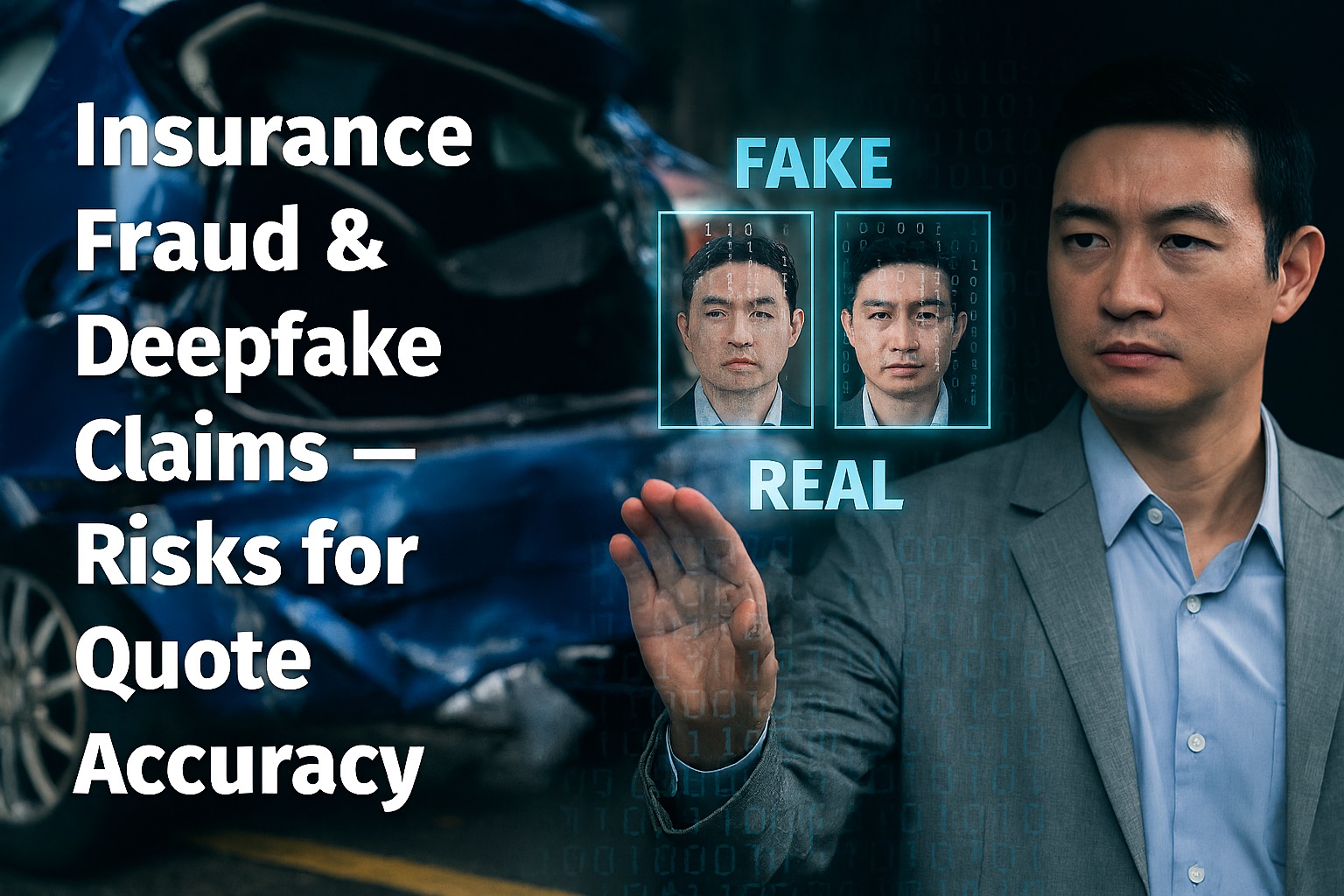
In 2025, the insurance industry faces an unprecedented challenge: AI-powered fraud schemes and sophisticated deepfake claims that are becoming increasingly difficult to detect. These advanced fraudulent activities cost the auto insurance industry over $45 billion annually, with these costs ultimately passed to consumers through higher premiums.
This comprehensive analysis explores how modern fraud techniques are evolving, the technologies being developed to combat them, and how these dynamics directly impact insurance quote accuracy and affordability for honest policyholders.
The Evolution of Insurance Fraud: From Traditional to AI-Powered
Insurance fraud has transformed from simple exaggeration of claims to sophisticated, technology-driven schemes that leverage artificial intelligence and digital manipulation.
Traditional Fraud
Exaggerated claims, staged accidents, and phantom injuries
Detection Rate: 68%
Digital Fraud
Digital document forgery, synthetic identities, and application fraud
Detection Rate: 45%
Deepfake Claims
AI-generated evidence, synthetic media, and manipulated documentation
Detection Rate: 28%
Organized Crime
Multi-claim schemes, professional fraud rings, and international operations
Detection Rate: 35%
The Deepfake Threat Evolution Timeline
How AI-Generated Fraud Has Evolved
Early Deepfake Emergence
Basic video and audio manipulation tools became accessible, enabling simple claim falsification through edited photos and basic video alterations.
Synthetic Media Proliferation
AI-generated images and videos became nearly indistinguishable from reality, enabling creation of entirely fictional accident scenes and damage documentation.
Multi-Modal Fraud Schemes
Integrated fraud operations combining deepfake visuals, synthetic audio evidence, and AI-generated documentation created comprehensive fraudulent claim packages.
Real-Time Fraud Generation
AI systems capable of generating fraudulent evidence in real-time during claims processes, adapting to investigator questions and requirements dynamically.
How Fraud Costs Impact Your Premiums
Fraud Cost Impact Calculator
Estimate how insurance fraud affects your insurance costs
Advanced Fraud Detection Technologies
Insurers are deploying sophisticated AI systems to combat evolving fraud techniques, with varying levels of effectiveness across different fraud types.
Blockchain Verification
Distributed ledger technology for immutable claim documentation and vehicle history tracking.
- Prevents document tampering
- Ensures claim history integrity
- Reduces synthetic identity fraud
- Limitation: Requires industry-wide adoption
AI Pattern Recognition
Machine learning algorithms that identify suspicious claim patterns and anomalies across millions of data points.
- Detects organized fraud rings
- Identifies claim clustering
- Predicts fraudulent behavior
- Limitation: Requires extensive training data
Deepfake Detection AI
Specialized neural networks trained to identify AI-generated media through digital fingerprint analysis and consistency checking.
- Analyzes video/audio authenticity
- Detects synthetic media artifacts
- Verifies temporal consistency
- Limitation: Constantly evolving arms race
Biometric Verification
Voice recognition, facial authentication, and behavioral biometrics for claimant identity verification.
- Prevents identity theft
- Verifies claimant presence
- Detects synthetic identities
- Limitation: Privacy concerns and implementation costs
"We're in a technological arms race where fraudsters have access to the same AI tools as insurers. The sophistication of deepfake claims has reached a point where human adjusters can no longer reliably distinguish real from synthetic evidence without advanced detection tools." - Dr. Marcus Thorne, AI Security Researcher
Geographic Fraud Hotspots and Premium Impacts
Insurance fraud rates vary significantly by region, creating substantial premium differences based on geographic risk assessment.
Florida
Highest staged accident rates and organized fraud ring activity
PIP fraud remains particularly problematicCalifornia
Sophisticated technology fraud and deepfake claim concentration
Silicon Valley proximity drives tech-savvy fraudNew York
Organized crime involvement and complex multi-claim schemes
Urban density enables fraud network operationsMichigan
Medical provider fraud and unnecessary treatment schemes
No-fault system creates unique fraud opportunitiesThe AI Arms Race: Fraud vs. Detection
Generative AI Fraud Tools
Fraudsters leverage increasingly sophisticated AI systems to create convincing synthetic evidence:
- Photorealistic accident scene generation
- Synthetic witness testimony creation
- AI-generated medical documentation
- Automated claim narrative generation
Detection AI Countermeasures
Insurers deploy advanced detection systems to identify synthetic content:
- Digital fingerprint analysis
- Behavioral pattern recognition
- Cross-reference verification systems
- Real-time claim assessment AI
Regulatory Responses
Governments and industry bodies develop new frameworks:
- Digital evidence standards
- AI authentication requirements
- Cross-industry fraud databases
- Enhanced penalty structures
Protection Strategies for Consumers and Insurers
How to Mitigate Fraud Risks and Associated Costs
Comprehensive Documentation
Always document accidents thoroughly with timestamped photos and videos from multiple angles. Use dashcams with cloud storage to create immutable accident records.
Policy Transparency
Choose insurers with transparent fraud prevention measures and clear communication about how fraud detection affects premium calculations and claim processing.
Identity Protection
Secure personal information and monitor for signs of identity theft that could be used to file fraudulent claims in your name.
Fraud-Aware Shopping
When comparing insurance quotes, consider insurers' fraud detection capabilities and historical performance in controlling fraud-related costs.
Fraud Reporting
Report suspected fraud to your insurer and state insurance departments. Consumer vigilance helps insurers identify new fraud patterns early.
Future Predictions: The Next Frontier of Insurance Fraud
Emerging Threats and Evolving Defenses
Quantum-Resistant Fraud
Quantum computing may break current encryption, enabling new forms of digital fraud while simultaneously powering advanced detection systems.
Autonomous Vehicle Fraud
As self-driving cars become prevalent, new fraud vectors emerge around vehicle system manipulation and AI behavior exploitation.
Predictive Fraud Prevention
AI systems that predict and prevent fraud before it occurs through behavioral analysis and pre-emptive risk assessment.
Key Takeaways
- Insurance fraud costs exceed $45 billion annually, adding approximately $680 to each policyholder's premium
- Deepfake and AI-generated fraud represent the fastest-growing fraud category, with detection rates below 30%
- Geographic fraud hotspots can increase local premiums by 25-35% compared to low-fraud regions
- Advanced detection technologies including blockchain and AI pattern recognition are becoming essential tools
- Consumers can protect themselves through thorough documentation and choosing insurers with robust fraud prevention
- The fraud-detection arms race will continue to evolve with emerging technologies like quantum computing
As insurance fraud becomes increasingly sophisticated through AI and deepfake technologies, the entire insurance ecosystem must adapt. While these advancements present significant challenges, they also drive innovation in detection and prevention that ultimately benefits honest consumers through more accurate risk assessment and fairer premium pricing.