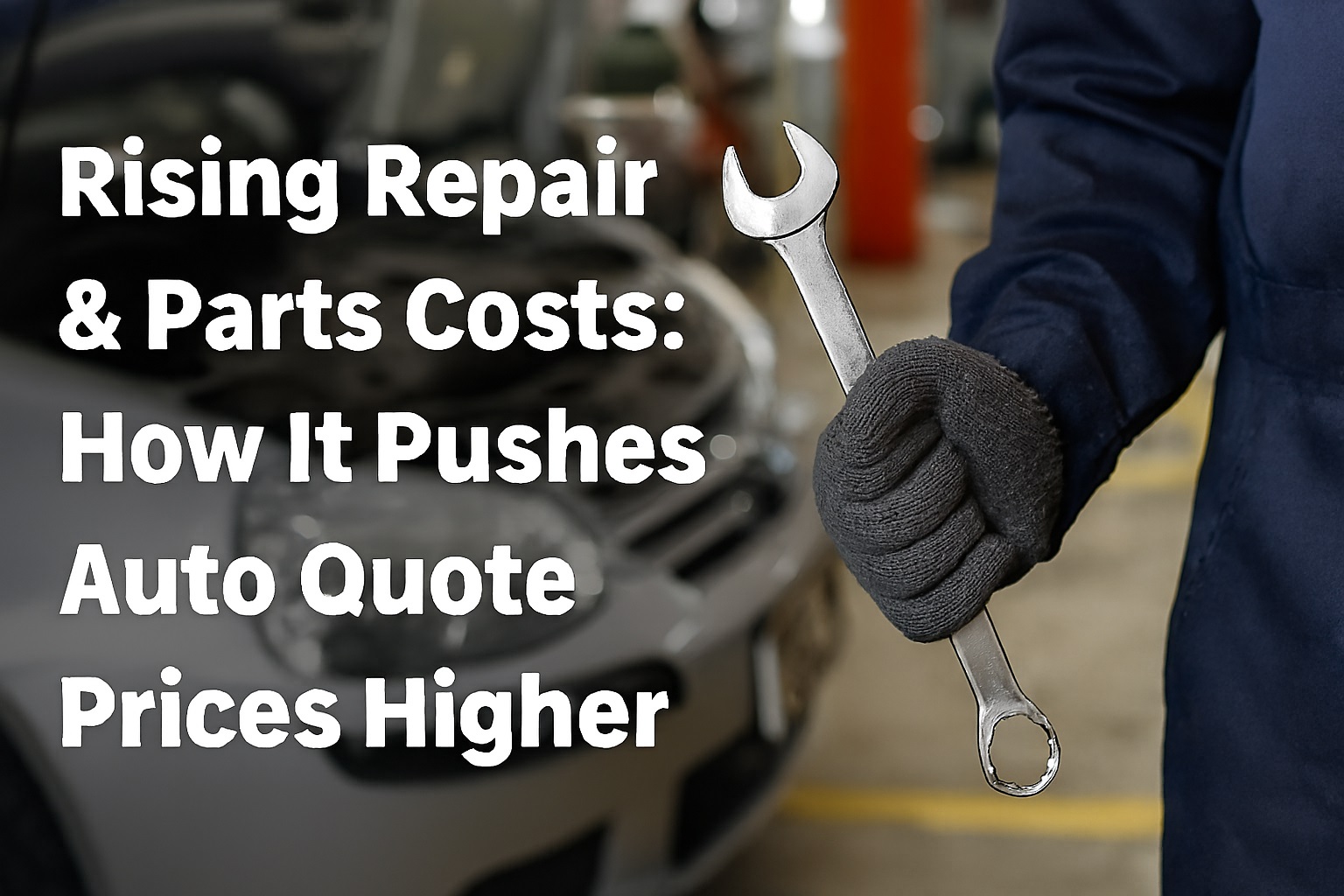
In 2025, auto insurance premiums are experiencing unprecedented increases, largely driven by soaring repair and parts costs that have outpaced general inflation. The average auto repair claim has increased by 42% since 2022, forcing insurers to adjust premiums accordingly to maintain financial stability.
This comprehensive analysis explores the complex factors driving repair cost inflation and how these increases directly translate into higher insurance quotes for consumers across all vehicle types and coverage levels.
The Repair Cost Inflation Crisis by the Numbers
Multiple factors have converged to create the perfect storm for repair cost inflation, with each component contributing to overall premium increases.
Overall Repair Costs
Since 2022
Average increase across all repair types, with collision repairs seeing the steepest rises
Auto Parts Prices
Since 2022
Critical components like sensors, cameras, and advanced electronics driving costs
Labor Rates
Since 2022
Specialized technician shortages and increased complexity driving labor costs
Technology Components
Since 2022
ADAS sensors, cameras, and computer modules experiencing massive cost inflation
The Timeline of Repair Cost Inflation
How We Reached Record Repair Costs
Supply Chain Disruption Phase
Post-pandemic supply chain issues created parts shortages and 6-12 month wait times for critical components, driving up costs and repair durations.
Labor Market Transformation
Technician shortages worsened as experienced mechanics retired and fewer new technicians entered the field, increasing labor rates by 25-40%.
Technology Complexity Explosion
Advanced driver assistance systems (ADAS) became standard, requiring costly calibration and specialized equipment for even minor repairs.
Consolidated Impact
All factors converged, creating sustained high repair costs that insurers had to reflect in premium calculations to maintain solvency.
How Repair Costs Translate to Insurance Premiums
Repair Cost Impact Calculator
Estimate how rising repair costs affect your insurance premium
Vehicle-Specific Repair Cost Comparisons
Different vehicle types experience dramatically different repair cost impacts, which directly affect insurance premiums.
Standard Gasoline Vehicles
Traditional vehicles face moderate increases primarily due to labor rates and basic parts inflation. Repair costs remain most predictable for these models.
- Average front-end repair: $3,200
- Parts availability: Good
- Technician availability: Fair
Electric Vehicles
EVs experience the steepest repair cost increases due to battery concerns, specialized technician requirements, and proprietary parts systems.
- Average front-end repair: $6,800
- Parts availability: Limited
- Technician availability: Poor
Luxury Vehicles
Premium brands face significant cost increases due to imported parts, dealer-only repair requirements, and complex electronic systems.
- Average front-end repair: $8,500
- Parts availability: Limited
- Technician availability: Specialized
Key Factors Driving Repair Cost Inflation
The Primary Drivers Behind Soaring Repair Expenses
Advanced Vehicle Technology
ADAS sensors, cameras, and computer systems requiring calibration
Parts Supply Chain Issues
Extended wait times and limited availability for critical components
Labor Cost Increases
Specialized technician shortages and increased repair complexity
EV-Specific Challenges
Battery concerns, high-voltage systems, and proprietary repairs
"The fundamental economics of auto insurance have shifted. Where we once worried about frequency of claims, we now face severity challenges that dwarf historical patterns. A minor fender bender that cost $1,500 to repair in 2020 now regularly exceeds $4,000 due to sensor arrays and calibration requirements." - MathsInsure, Insurance Claims Director
Regional Variations in Repair Cost Impacts
Repair costs and their insurance implications vary significantly by geographic region due to labor markets, regulatory environments, and repair shop concentration.
Northeast
Highest labor rates and strict repair regulations drive premium increases
Average labor rate: $125/hrWest Coast
High concentration of luxury and electric vehicles amplifies cost pressures
Average labor rate: $135/hrMidwest
More moderate increases with better parts availability and labor markets
Average labor rate: $98/hrSouth
Growing population centers creating repair shop capacity issues
Average labor rate: $105/hrStrategies to Mitigate Repair Cost Impacts
Proactive Approaches to Manage Insurance Costs
Increase Deductibles Strategically
Consider higher comprehensive and collision deductibles to offset premium increases, but ensure you maintain adequate coverage for major repairs.
Leverage OEM Repair Programs
Some insurers offer programs with certified OEM parts and repair facilities that may provide better long-term value despite higher initial costs.
Shop Insurance Based on Repair Networks
Choose insurers with robust preferred repair networks that can control costs through volume discounts and established relationships.
Consider Aftermarket Parts Options
For older vehicles, consider policies that allow certified aftermarket parts, which can significantly reduce repair costs without compromising safety.
Evaluate Vehicle Technology Choices
When purchasing vehicles, consider repair costs and insurance implications of advanced safety systems and proprietary technology.
Future Trends in Auto Repair and Insurance
Predictive Repair Analytics
AI-powered systems that predict repair needs and costs before accidents occur, allowing for more accurate premium calculations and preventive maintenance discounts.
3D Printed Parts
Localized manufacturing of non-critical components reducing wait times and costs for specific repair scenarios, particularly for older or rare vehicles.
Telematics-Enhanced Claims
Real-time vehicle data providing immediate damage assessment and repair cost estimates, streamlining claims and reducing administrative costs.
Manufacturer-Insurer Partnerships
Direct relationships between automakers and insurers to control repair costs through standardized procedures and bulk parts purchasing.
Key Takeaways
- Auto repair costs have increased 42% since 2022, directly driving insurance premium increases
- Advanced vehicle technology accounts for 32% of repair cost inflation
- Electric vehicles experience the steepest repair cost increases at 65% above 2022 levels
- Regional variations show premium impacts from 15-25% depending on local repair markets
- Strategic deductible adjustments and repair network selection can help mitigate cost impacts
- Emerging technologies like 3D printing and predictive analytics may help control future costs
While rising repair costs present significant challenges for insurance affordability, understanding the underlying factors and implementing strategic responses can help consumers navigate this new landscape. By making informed vehicle choices, optimizing coverage levels, and selecting insurers with strong cost-control measures, drivers can better manage the impact of repair inflation on their insurance premiums.