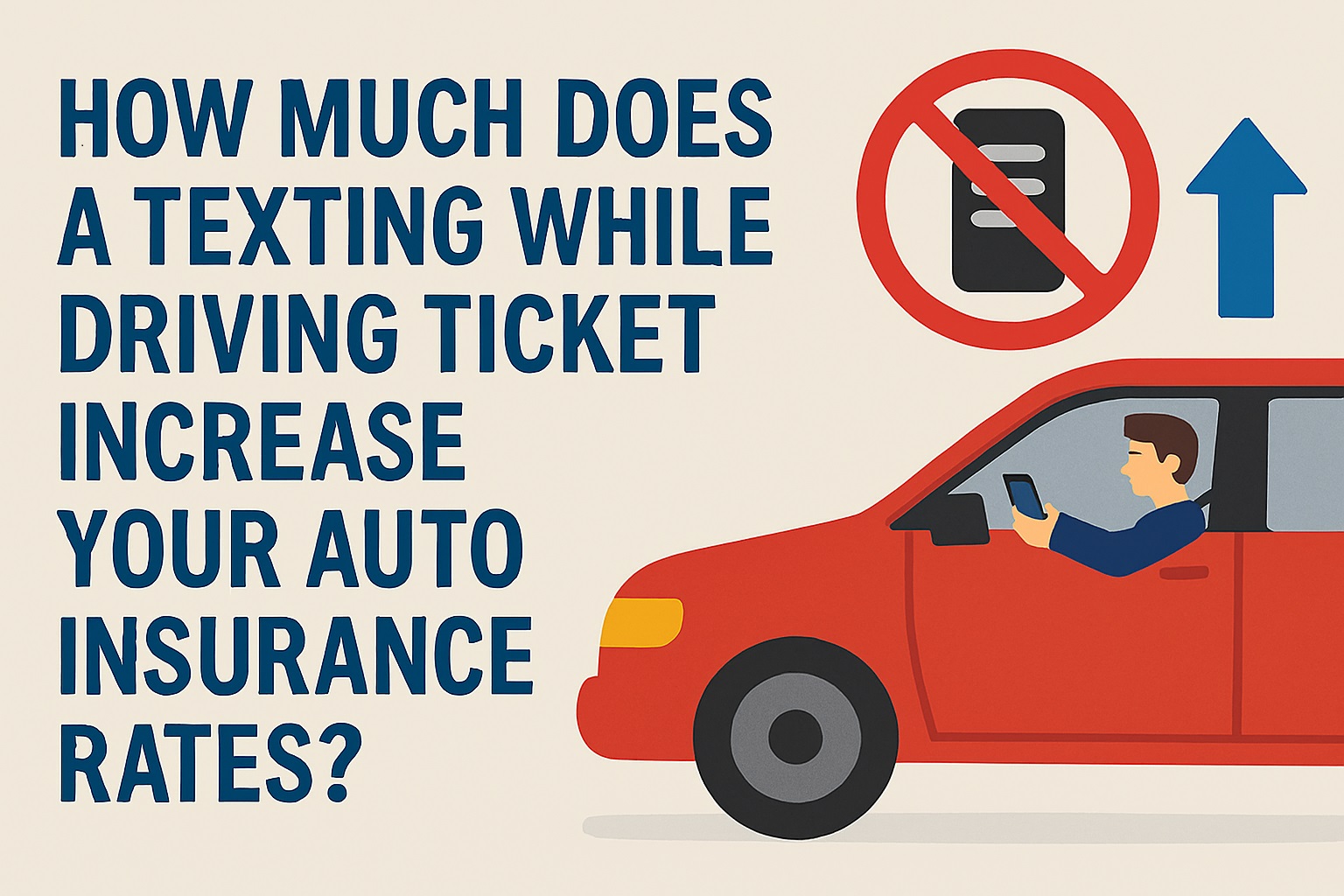
That quick glance at your phone while driving might seem harmless, but if it leads to a ticket, the financial consequences are anything but minor. Beyond the initial fine, a texting while driving citation can trigger a severe and lasting increase in your auto insurance premiums—a cost that often catches drivers completely off guard.
In this guide, we break down exactly how much more you can expect to pay, why insurers penalize this violation so heavily, and what you can do to protect your wallet.
The Stark Numbers: Average National Increase
The consensus from major insurance rate analyses is clear: a texting while driving ticket is one of the costliest common violations you can get.
The Percentage and Dollar Impact
Average Increase: Across the United States, drivers see their annual car insurance premiums rise by an average of 23% to 28% after a texting ticket .
Dollar Cost: This percentage translates to a substantial yearly surcharge. Estimates put the average additional cost between $344 and $357 per year . For many drivers, especially those with higher base rates or in expensive states, the increase can exceed $900 annually .
Historical Context: This penalty has skyrocketed. One study found that the average insurance penalty for distracted driving grew by over 7,000% between 2011 and 2026, from just a few dollars to hundreds, reflecting how seriously insurers now view the risk .
A Real-World Lesson: "It Cost Me Over $2,000"
"A few years ago, a friend of mine—let's call him Mark—was stuck in slow-moving traffic. Thinking it was safe, he picked up his phone to change the song on his playlist. A motorcycle officer saw him and lit him up.
He paid the $150 fine thinking that was the end of it. At his next insurance renewal, his premium had jumped from about $1,800 a year to nearly $2,400. His insurer explained the 32% hike was due to the 'distracted driving conviction' on his record .
That single, momentary decision ended up costing him an extra $600 per year for three years—totaling $1,800 on top of the fine. He calculates the total financial hit at well over $2,000. He always says, 'For the price of that text, I could have bought a new phone and a nice dinner. Instead, I just bought a very expensive lesson.'"
Your Location Matters: A State-by-State Breakdown
Where you live is one of the biggest factors in determining your penalty. State insurance regulations and risk models lead to dramatic differences .
| State | Average Premium Increase | Key Notes |
|---|---|---|
| California | 51% | Highest average increase. A second offense can add a point and a 32%+ hike . |
| New Jersey | 44% - 47% | Consistently among the top states for penalties. |
| Connecticut | 64% | Some analyses show the highest percentage penalty. |
| New York | 9% - 11% | Among the lowest increases, but still adds cost. |
| Wyoming, Hawaii, Pennsylvania | 12% - 23% | Generally have lower-than-average penalties. |
Important: It's Not Just About Points
A common misconception is that if a ticket doesn't add points to your license, it won't affect your insurance. This is not true. Insurance companies raise rates based on the violation appearing on your driving record, which signals risky behavior. They do not require a DMV point to justify a premium increase .
Other Factors That Influence Your Personal Rate Hike
Your Driving Profile
- Age & Experience: Younger, less experienced drivers often face larger percentage increases .
- Existing Record: A clean record may mean a modest hike. Prior tickets or accidents will amplify the penalty .
- Your Insurer: Companies weight violations differently. For example, one study showed Travelers imposed a 49% average increase for a texting ticket, while State Farm's was 15% .
Severity of the Offense
- Simple Violation: A ticket for holding your phone at a red light.
- Enhanced Violation: If texting is combined with reckless driving or results in an accident, the financial and legal penalties become much more severe .
How to Minimize the Financial Damage
If you've received a ticket, don't just pay the fine and accept the fate. Take proactive steps.
Actionable Steps to Reduce Impact
- Contest the Ticket: Consulting with a traffic attorney can be worthwhile. If they can get the ticket dismissed or reduced to a non-moving violation, you may avoid the insurance surcharge entirely .
- Shop for New Insurance: Not all insurers penalize violations equally. After a ticket, it's always a good time to compare quotes from other companies .
- Ask About Forgiveness: Check if your current insurer offers a "violation forgiveness" program for a first offense .
- Take a Defensive Driving Course: Completing an approved course may earn you a discount that could partially offset the increase .
- Maintain a Clean Record: This is the most important long-term strategy. Avoid any further violations to ensure your rates can decrease after the 3-5 year surcharge period ends .
"Insurers have mountains of data proving that distracted driving dramatically increases crash risk. The sharp rise in surcharges over the past decade isn't punitive; it's actuarial. They are pricing for the very real and expensive risk that drivers with these violations pose." — Industry Analysis
Frequently Asked Questions (FAQ)
The true cost of a texting while driving ticket extends far beyond the fine you pay to the court. It's a multi-year financial commitment in the form of significantly higher insurance premiums. By understanding these costs and taking proactive steps—both to fight a ticket and to drive more safely—you can protect your finances and, more importantly, ensure the safety of everyone on the road.