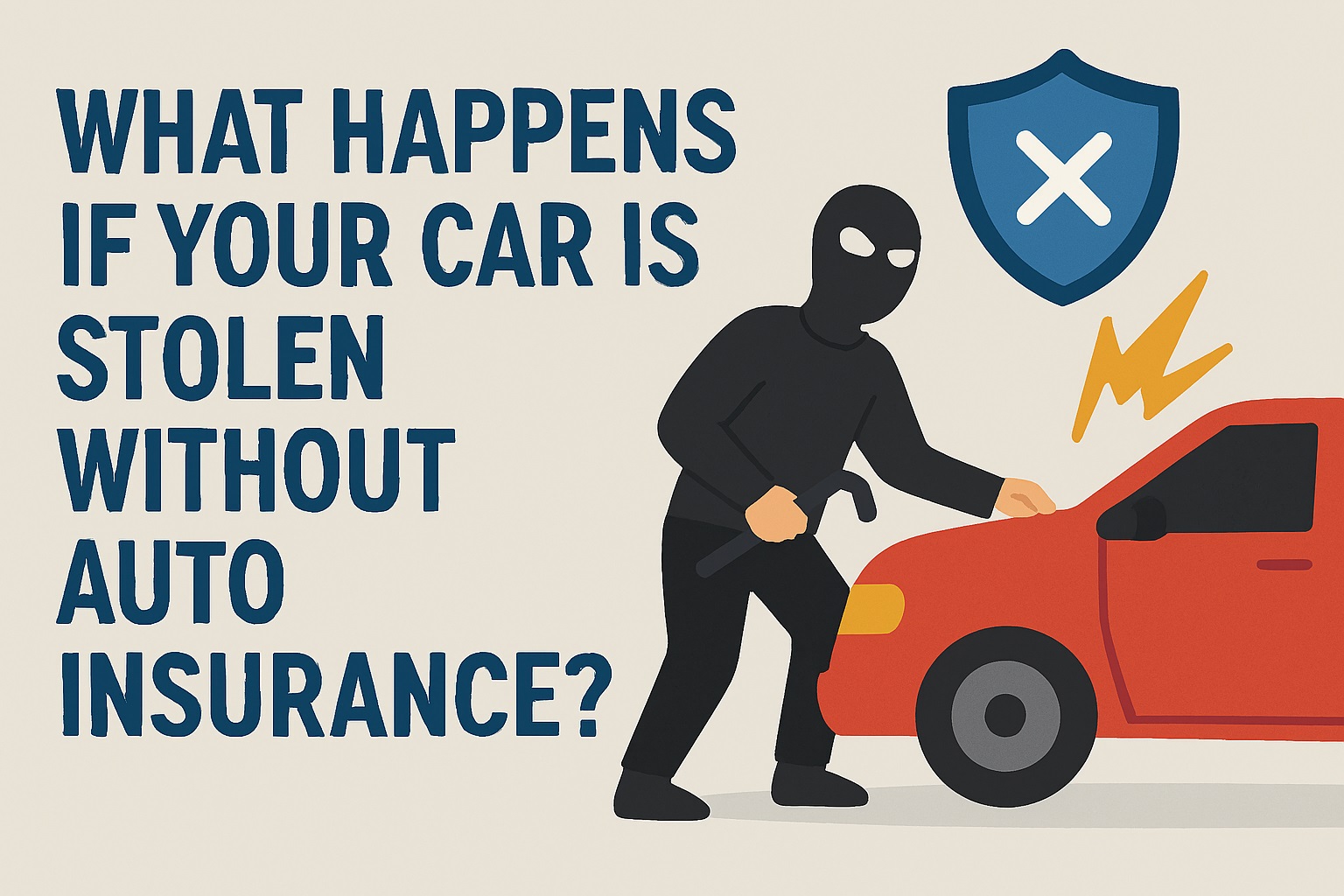
Discovering your car has been stolen is a gut-wrenching experience. That feeling turns to outright dread when you realize you don't have auto insurance to fall back on. With over 1 million vehicles reported stolen in the U.S. annually, this nightmare scenario is more common than many think .
If you find yourself in this situation, the harsh reality is that you bear the full, crushing financial weight alone. This guide details the severe consequences, the critical steps you must take immediately, and how to ensure you're never this vulnerable again.
The Severe Financial Consequences
1. Total Loss of Your Vehicle's Value
Without comprehensive coverage, there is no safety net. You receive $0 from an insurer to replace your car . Whether your car was worth $5,000 or $50,000, that entire financial asset is simply gone, and the burden to replace it falls squarely on you .
2. Ongoing Loan or Lease Payments
This is one of the most devastating blows. Your debt does not disappear with your car . You are legally required to continue making full monthly payments on a vehicle you can no longer use . Defaulting damages your credit score and can lead to legal action from the lender. Some may offer a short 30-90 day hardship deferral if you call immediately, but the debt remains .
3. Mounting Transportation Costs
You still need to get to work, run errands, and live your life. Without rental reimbursement coverage, you pay out-of-pocket for:
- Rental cars: $40 - $80 per day
- Rideshares: $15 - $25 per trip
- Public transit: Adds up over weeks and months
4. Costs If Your Car Is Recovered
Recovery isn't always good news. Police recover only about 56% of stolen vehicles, and of those, a mere 15% are undamaged . If found, you are responsible for all towing and impound fees, plus the full cost of repairing any damage—which can easily total the vehicle .
Legal & Liability Risks
Driving without the state-required minimum liability insurance is illegal and can result in fines or license suspension, separate from the theft . Furthermore, if the thief causes an accident with your stolen car, you could face complex legal battles. While liability often falls on the thief, proving non-involvement can require costly legal help .
Immediate Action Plan: What to Do Right Now
Time is your most critical asset. Follow these steps meticulously to maximize the chance of recovery and protect yourself legally.
Step 1: File a Police Report (Within 2 Hours)
This is non-negotiable and your first call. Reporting within 2 hours can increase recovery odds by 60% compared to waiting 12+ hours .
- Call the non-emergency line or visit the station.
- Provide your Vehicle Identification Number (VIN), make, model, color, license plate, and last known location.
- Get the official police report number. This document is essential for all next steps .
Step 2: Contact Your Lender or Leasing Company (Within 24 Hours)
Inform them of the theft immediately. Discuss your situation honestly:
- Ask specifically about hardship programs or payment deferrals (often 30-90 days) .
- Confirm whether your lease or loan includes GAP coverage, which could forgive a loan balance higher than the car's value (though this is rare without insurance) .
- Understand your ongoing payment obligations.
Step 3: Notify Your State's DMV
Report the theft to the Department of Motor Vehicles. This flags the vehicle in state systems, helps prevent title fraud, and can protect you from liability for parking tickets or tolls accrued by the thief .
Step 4: Secure Alternative Transportation & Plan Your Next Move
Be realistic. Police may close the case after 30 days if no leads exist . Start planning now:
- Budget aggressively for a replacement. Consider certified pre-owned ($15,000-$35,000) or private sales for better value .
- Explore financing through a credit union, which often offers rates 2-4% lower than dealerships .
"The financial shock of paying for a ghost car—making loan payments on a vehicle you no longer have while scrambling to find thousands for a replacement—can derail personal finances for years. Comprehensive insurance is the affordable circuit breaker that prevents this disaster."
How to Protect Yourself From This Nightmare
The solution is straightforward, affordable, and non-negotiable for financial security.
1. Get Comprehensive & Collision Coverage
- Myth: "My basic liability insurance covers theft." Reality: It does not. Only comprehensive coverage pays for theft, fire, vandalism, and animal collisions .
- Cost: It's far cheaper than people think, typically $150-$300 per year (about $12-$25 per month) . This is a tiny fraction of the $20,000+ loss it prevents.
2. Add GAP Insurance (If Financed/Leased)
If your car is totaled or stolen, standard insurance pays the vehicle's current market value. If you owe more on your loan than the car is worth (common in the first few years), GAP insurance covers that "gap," preventing you from owing money on a gone car .
3. Invest in Anti-Theft Measures
- Visible Deterrents: Steering wheel locks signal to thieves that your car is a harder target .
- GPS Trackers: Devices like Apple AirTag or dedicated systems ($200-$600) can dramatically increase recovery chances and often qualify you for an insurance discount .
- Always: Lock doors, close windows, and never leave your car running unattended .
Frequently Asked Questions (FAQ)
The aftermath of a car theft without insurance is a stark lesson in financial risk. The costs are catastrophic, immediate, and entirely personal. While following the steps above can help you navigate the crisis, the only true protection is the right insurance coverage before disaster strikes. Don't gamble with an asset as essential as your vehicle; ensure you have comprehensive coverage today.