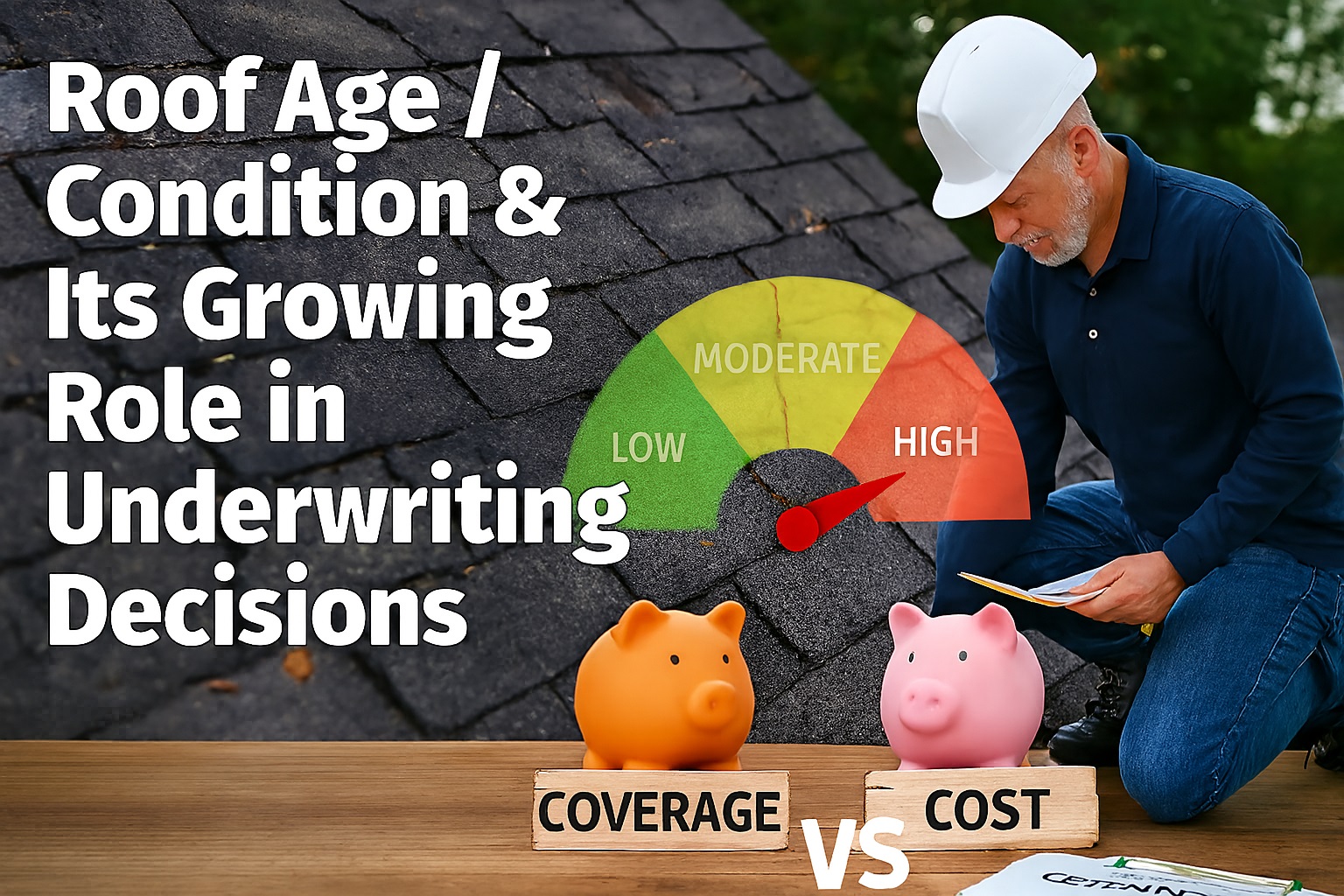
In 2025, your roof has become one of the most critical factors in home insurance underwriting decisions. With climate change intensifying weather patterns and roofing costs skyrocketing, insurers are paying unprecedented attention to roof age, condition, and materials when evaluating risk and setting premiums.
The shift toward roof-focused underwriting represents a fundamental change in how insurers assess property risk. Where location and home value once dominated underwriting decisions, roof integrity has emerged as the primary predictor of weather-related claims.
Why Roofs Now Dominate Underwriting Decisions
Several factors have converged to elevate the importance of roof assessment in insurance underwriting:
- Climate Change Impacts: Increased frequency and severity of storms, hail, and high winds
- Roofing Cost Inflation: 45% increase in roofing material and labor costs since 2022
- Satellite Technology: Advanced imaging allows remote assessment of roof condition
- Data Analytics: Insurers now have decades of claims data correlating roof age with loss ratios
- Regulatory Pressure: States requiring more accurate risk assessment in disaster-prone areas
Optimal condition, maximum discounts, preferred status with most insurers
Regular maintenance required, some wear visible, may need inspection
Higher premiums, possible coverage restrictions, replacement often required
Roofing Materials and Their Insurance Impact
Common Roofing Materials Comparison
Most common, good wind resistance
Excellent durability, fire resistant
Heavy but durable, impact resistant
Premium material, exceptional longevity
Higher fire risk, may be restricted
Commercial use, good for flat roofs
"We've reached a point where the roof often determines whether we can insure a property at all. A 20-year-old roof in Florida or Colorado is now seen as uninsurable by many carriers without significant premium surcharges or ACV-only coverage." - Mark Thompson, Chief Underwriting Officer
The Underwriting Inspection Revolution
Satellite & Aerial Imaging
Insurers now use high-resolution satellite imagery to assess roof condition before even issuing a quote. These systems can detect moss growth, missing shingles, and overall roof deterioration with surprising accuracy.
Drone Inspections
For high-value properties or questionable roofs, insurers are increasingly requiring professional drone inspections. These provide detailed imagery of hard-to-see areas and precise measurements of roof damage.
Photo Documentation
Many insurers now require homeowners to provide recent photos of their roof from multiple angles. Some companies even offer mobile apps that guide you through the photo documentation process.
Regional Underwriting Variations
Geographic Roof Requirements
Hurricane-Prone Regions (FL, Gulf Coast, Southeast)
Requirements: Wind mitigation features, hip roofs preferred, secondary water resistance. Roofs over 15 years often require replacement for full coverage.
Impact: Premium differences of 40-60% between compliant and non-compliant roofs.
Wildfire Zones (CA, CO, AZ, Northwest)
Requirements: Class A fire-rated materials, no wood shakes, defensible space around property. Regular inspections mandatory in high-risk areas.
Impact: Non-compliant roofs may be uninsurable through standard markets.
Hail Belt (TX, OK, KS, NE, CO)
Requirements: Impact-resistant shingles (Class 3 or 4), reinforced decking. Age restrictions often stricter than other regions.
Impact: Impact-resistant roofs can save 15-30% on premiums in hail-prone areas.
Snow Regions (Northeast, Midwest)
Requirements: Strong load-bearing capacity, ice and water shield in valleys and edges. Proper ventilation to prevent ice dams.
Impact: Ice dam protection features can significantly reduce winter-related claims.
Roof Replacement Timeline & Planning
Underwriting Criteria Breakdown
Assessors evaluate shingle integrity, granule loss, curling, and overall wear. High-quality materials in good condition receive the best ratings.
Proper installation techniques, flashing details, ventilation, and underlayment quality are critically evaluated. Poor installation can void material warranties.
Regular maintenance, cleaning, and documented repairs significantly impact underwriting decisions. Well-maintained older roofs can outperform neglected newer ones.
Strategic Actions for Homeowners
Keep records of roof installation, inspections, maintenance, and repairs. Photos before and after work can be invaluable during underwriting.
Address minor issues before they become major problems. Clean gutters regularly, remove debris, and trim overhanging branches.
Professional inspections every 2-3 years for roofs under 10 years, annually for older roofs. Document findings and address recommendations.
Start saving for roof replacement at 10-12 years. Consider insurance premium savings when calculating return on investment.
Common Questions Answered
Yes, increasingly so. Many insurers now decline coverage for roofs over 20 years old, especially in disaster-prone areas. Even newer roofs can be denied if they show significant damage or use prohibited materials like wood shakes in wildfire zones.
Replacement Cost Value (RCV) pays to replace your roof at current costs. Actual Cash Value (ACV) pays replacement cost minus depreciation. Many insurers force ACV coverage for older roofs, significantly reducing claim payouts.
Options include: accepting ACV coverage, paying higher premiums, using specialty insurers, or providing engineering reports proving roof integrity. The best solution is often planning for replacement.
Manufacturer warranties primarily cover material defects, while workmanship warranties cover installation. Neither typically satisfies insurance requirements, but they can demonstrate roof quality during underwriting.
Key Takeaways
- Roof age has become a primary underwriting factor, with 15-20 years often triggering significant premium increases
- Different regions have specific roof requirements based on local climate risks
- High-quality materials like metal and slate can provide substantial insurance discounts
- Regular maintenance and documentation can help offset age-related underwriting penalties
- Planning roof replacement around the 12-15 year mark can optimize insurance costs and coverage
- Advanced inspection technologies are making roof assessment more accurate and less invasive
- Understanding RCV vs ACV coverage is essential for proper financial planning
As we move through 2025, the relationship between roof condition and insurance underwriting will only strengthen. Homeowners who proactively manage their roof maintenance and replacement planning will find themselves with better coverage options, lower premiums, and greater financial protection. Your roof is no longer just shelter—it's become your most important insurance asset.