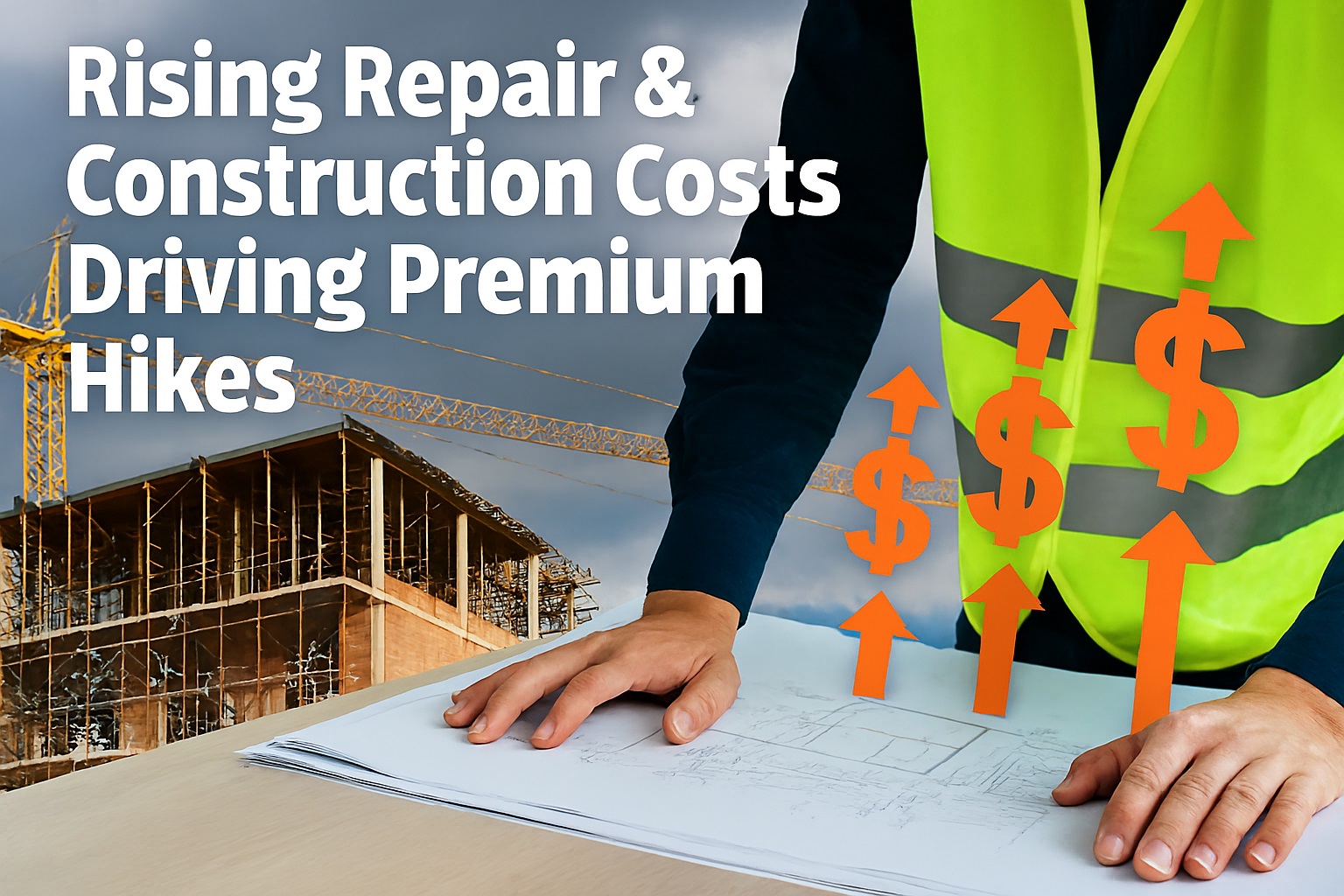
In 2025, homeowners across the country are facing a double financial squeeze: not only have construction and repair costs skyrocketed, but these increases are directly translating into higher insurance premiums. The fundamental relationship between rebuilding costs and insurance pricing means that when it becomes more expensive to repair or rebuild homes, insurance companies must adjust their rates accordingly.
The average cost to rebuild a home has increased by 38% since 2022, creating significant pressure on insurance premiums that many policyholders are feeling in their monthly budgets.
The Construction Cost Breakdown
Key Material Cost Increases
Why Construction Costs Directly Impact Insurance
Insurance premiums are fundamentally based on risk and potential payout amounts. When the cost to rebuild a home increases, the insurer's potential financial exposure increases proportionally. This relationship operates through several key mechanisms:
- Replacement Cost Calculations: Insurance companies must ensure coverage limits reflect current rebuilding costs
- Claim Settlement Amounts: Actual claim payouts have increased significantly for both partial and total losses
- Reinsurance Costs: Insurers' own insurance costs have risen as their exposure increases
- Loss Ratio Management: Companies must maintain adequate premiums to cover increasing claim expenses
"The math is straightforward: when the cost to rebuild a $400,000 home becomes $550,000, insurance companies have no choice but to adjust premiums to reflect this new reality. It's not profiteering—it's basic financial sustainability." - Robert Martinez, Chief Actuary, National Insurance Association
The Construction Cost Timeline
Regional Impact Variations
Premium Increases by Region
Construction cost increases and corresponding premium adjustments vary significantly across different markets:
High wildfire risk areas face additional costs for fire-resistant materials and specialized labor.
Hurricane building codes require more expensive construction methods and materials.
Older housing stock presents unique repair challenges and higher labor specialization costs.
Generally lower increases but still significant due to material cost inflation.
Cost Management Strategies for Homeowners
Regular Coverage Reviews
Conduct annual insurance reviews to ensure your coverage accurately reflects current rebuilding costs without over-insuring. Consider guaranteed replacement cost policies for better protection.
Proactive Home Maintenance
Invest in preventive maintenance to avoid major claims. Well-maintained homes typically qualify for premium discounts and reduce the likelihood of large repair claims.
Competitive Shopping
Compare quotes from multiple insurers annually. Different companies have varying approaches to calculating rebuilding costs and may offer better rates for your specific situation.
Deductible Optimization
Consider increasing your deductible if you have adequate emergency savings. This can reduce premiums by 15-30% while maintaining essential catastrophe protection.
Industry Response and Innovations
Insurance companies and industry stakeholders are implementing various strategies to address the cost crisis:
- Advanced Estimating Tools: AI-powered platforms that provide more accurate rebuilding cost assessments using current material and labor data
- Alternative Materials Programs: Discounts for homeowners who use cost-effective, durable alternative building materials
- Pre-negotiated Repair Networks: Partnerships with contractors who agree to standardized pricing for insurance work
- Modular Construction Options: Coverage options that incorporate factory-built components to reduce repair costs
Future Outlook and Predictions
2025-2027 Construction Cost Forecast
Material Costs
Expected to stabilize with 3-5% annual increases as supply chains normalize and production capacity expands. Certain specialized materials may continue above-average increases.
Labor Costs
Projected to increase 4-6% annually as skilled trades remain in high demand. Automation and prefabrication may help moderate long-term labor cost growth.
Insurance Premiums
Likely to see smaller increases of 5-8% annually as the initial cost shock is absorbed. Geographic risk differentiation will become more pronounced.
Technology Impact
Building information modeling (BIM) and construction automation expected to gradually reduce costs by 2027, potentially easing premium pressure.
Key Takeaways
- Construction costs have increased 38% on average since 2022, directly driving insurance premium hikes
- Material costs (particularly lumber, copper, and roofing) and labor shortages are the primary drivers
- Regional variations are significant, with highest increases in wildfire and hurricane-prone areas
- Homeowners should regularly review coverage, maintain properties, and shop competitively to manage costs
- Industry innovations in estimating tools and repair networks are helping moderate future increases
- Costs are expected to stabilize with moderate annual increases through 2027
While rising construction costs present challenges for both homeowners and insurers, understanding the relationship between rebuilding expenses and insurance premiums empowers consumers to make informed decisions. Regular policy reviews, proactive maintenance, and strategic coverage choices can help manage the financial impact while maintaining essential protection for your most valuable asset.