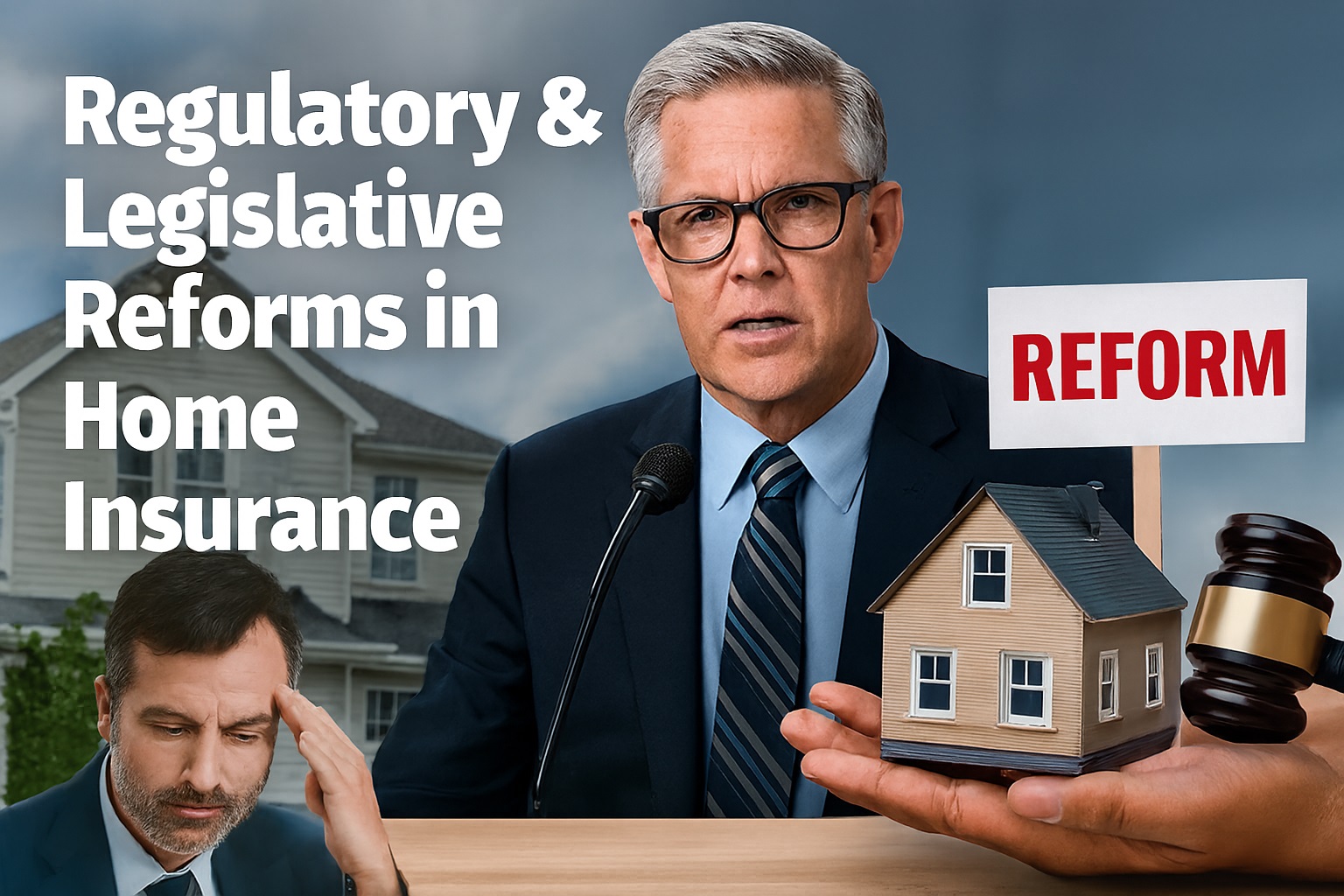
In 2025, the home insurance landscape is undergoing its most significant regulatory transformation in decades. Faced with climate change impacts, affordability crises, and market instability, state and federal lawmakers have enacted sweeping reforms designed to protect consumers while ensuring market sustainability. These changes are reshaping everything from underwriting practices to claims handling and market conduct.
The reforms represent a delicate balancing act between consumer protection, insurer solvency, and market accessibility—with outcomes that will define the home insurance market for years to come.
2025 Reform Overview
Key State-Level Reforms
Notable State Legislation in 2025
Wildfire Mitigation Credits: Requires insurers to offer premium discounts for verified wildfire safety improvements. Mandates consideration of defensible space and home hardening.
Claims Handling Reform: Reduces assignment of benefits abuses, strengthens insurer solvency requirements, and creates new mediation process for disputed claims.
Climate Risk Disclosure: Requires insurers to disclose climate risk assessment methodologies and provide clear explanations for non-renewals based on climate exposure.
Hail Damage Standards: Establishes uniform standards for hail damage assessment and creates certification program for hail damage inspectors.
"The 2025 reforms represent the most significant consumer protection enhancements since the creation of FAIR Plans. For the first time, we're seeing comprehensive approaches that address both affordability and availability challenges." - Commissioner MathsInsure, NAIC President
Enhanced Consumer Protections
Non-Renewal Restrictions
28 states now require specific, documented reasons for policy non-renewals. Many prohibit non-renewals solely based on zip code or credit score changes without individual risk assessment.
Effective: Varies by state, mostly 2025-2026
Claims Handling Timelines
New requirements for faster claims acknowledgment (24-48 hours) and final determination (30-45 days). Penalties for unreasonable delays in claims processing and payment.
Effective: January 2026 nationwide
Policy Language Simplification
Mandatory plain language requirements for policy documents. Elimination of overly technical jargon and hidden coverage limitations in basic policy forms.
Effective: Phased implementation 2025-2027
Rate Increase Justification
Insurers must provide detailed justification for premium increases over 10%, including specific risk factors driving the change and options for premium reduction.
Effective: 35 states as of 2025
2025 Reform Implementation Timeline
NAIC National Initiatives
Uniform methodology for assessing climate-related risks. Requires insurers to incorporate forward-looking climate models into underwriting and rate-setting.
Enhanced data protection standards for policyholder information. Mandatory breach notification within 72 hours. Regular security audits required.
Updated standards for state-run insurers of last resort. Requires adequate coverage limits and reasonable premium structures. Enhanced consumer assistance programs.
Framework for responsible use of artificial intelligence in underwriting. Requires transparency, bias testing, and human oversight of automated decisions.
New Insurer Requirements
Compliance Obligations for Insurance Carriers
Must offer verified premium discounts for qualifying home hardening and safety improvements
Public reporting of climate risk exposure and adaptation strategies required annually
Must offer modified coverage options when standard policies are declined
Filed emergency response plans for catastrophic events required in all states
Market Impacts & Industry Response
Premium Trends
Initial data shows moderated premium increases in states with robust reforms. Mitigation credits are reducing costs for proactive homeowners, while base rates adjust for improved consumer protections.
Average Impact: 5-15% variation from pre-reform trends
Insurer Adaptation
Carriers are investing in new underwriting technologies and compliance systems. Many are developing enhanced risk assessment tools that incorporate mitigation factors rather than simply avoiding high-risk areas.
Industry Investment: $850M in compliance technology
Consumer Behavior
Increased demand for home mitigation assessments and improvements. Growing consumer awareness of coverage options and rights. More sophisticated shopping behavior with emphasis on value rather than just price.
Mitigation Uptake: 42% increase in assessments
Future Regulatory Outlook
2026-2028 Regulatory Forecast
Emerging Issues: Regulatory attention is shifting toward parametric insurance products, blockchain-based policy administration, and standardized metrics for building resilience. International coordination on climate risk standards is also gaining momentum.
Common Questions Answered
Check your state's Department of Insurance website for consumer guides to 2025 reforms. Most states have created simplified summaries of new consumer rights and insurer requirements. Your insurance agent should also be able to explain how reforms affect your specific policy.
Document the issue and contact your state's insurance department consumer assistance division. Most states have enhanced their enforcement capabilities and streamlined complaint processes for reform-related issues. Keep copies of all communications with your insurer.
Most reforms apply to standard homeowners, renters, and condo policies. Some provisions, particularly those related to underwriting and non-renewals, may have different applications for specialty lines or excess and surplus coverage. Flood insurance reforms are handled separately through the NFIP.
Contact your insurer for information about approved mitigation measures and verification processes. Many states maintain lists of certified inspectors who can document qualifying improvements. Common credits are available for wildfire defensible space, wind-resistant features, and flood mitigation measures.
Key Takeaways
- 42 states have enacted significant home insurance reforms in 2024-2025, focusing on consumer protection and market stability
- Enhanced non-renewal protections and claims handling requirements provide stronger consumer safeguards
- New mitigation credit requirements are creating financial incentives for home safety improvements
- Climate risk disclosure and AI underwriting guidelines represent forward-looking regulatory approaches
- Insurers face substantial compliance requirements but are adapting with new technologies and underwriting models
- Future regulatory attention will focus on parametric insurance, blockchain, and international climate standards
- Consumers should proactively understand their rights and explore mitigation credit opportunities
The 2025 regulatory and legislative reforms represent a watershed moment for the home insurance industry. While implementation challenges remain, these changes collectively move the market toward greater transparency, fairness, and resilience. Both consumers and insurers who proactively adapt to this new regulatory landscape will be best positioned to navigate the evolving challenges of climate risk, technological change, and market transformation in the years ahead.