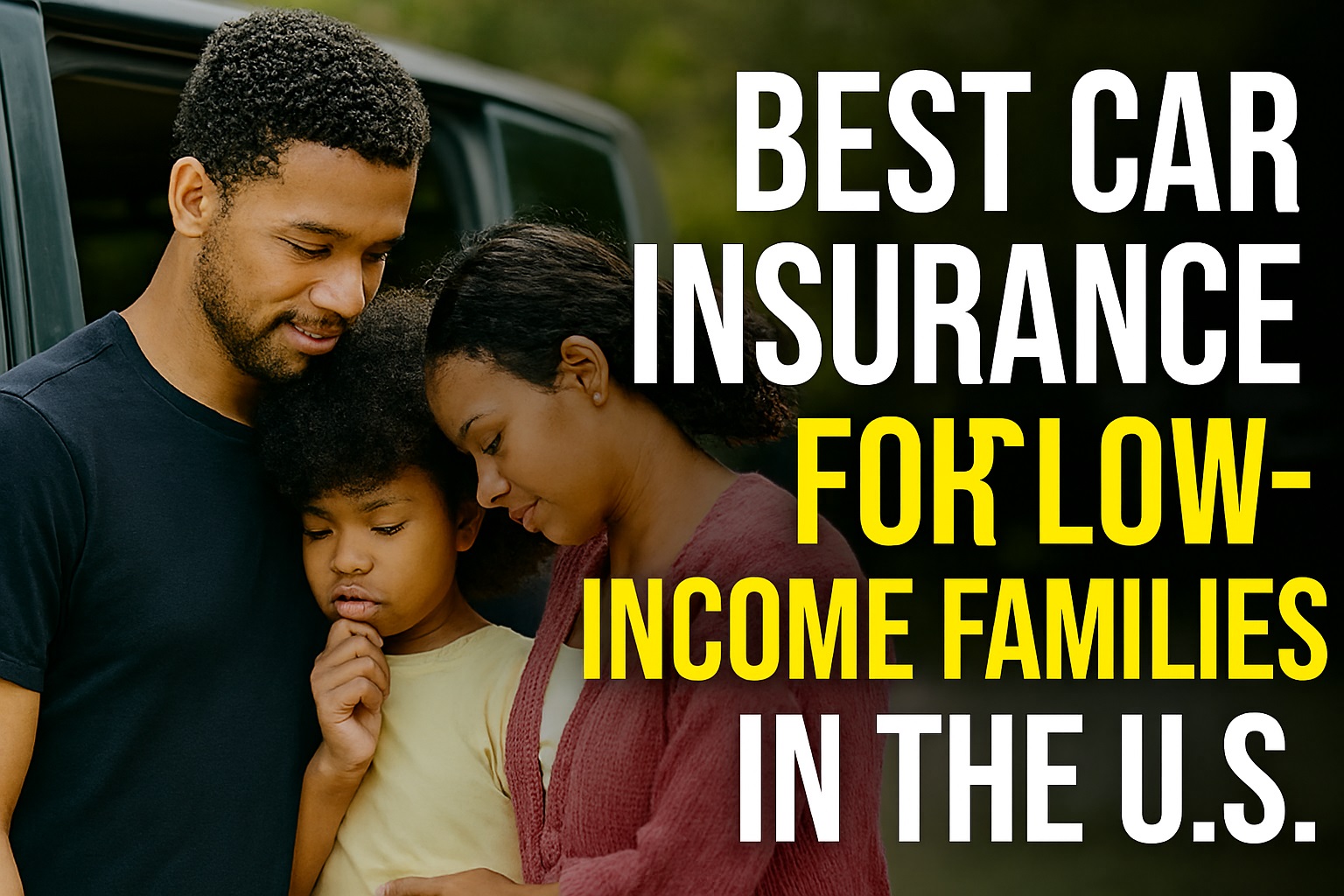
Finding affordable car insurance on a limited budget can feel overwhelming, but numerous options exist to help low-income families secure legal coverage without financial strain. In 2025, families have access to both state-sponsored programs and competitively priced private insurers that make maintaining required auto insurance achievable.
This comprehensive guide examines the most affordable car insurance options available nationwide, including state-specific assistance programs, budget-friendly providers, and proven strategies to reduce premiums while maintaining essential coverage.
State-Sponsored Low-Income Car Insurance Programs
Four states currently offer government-assisted car insurance programs designed specifically for low-income residents. These programs provide basic liability coverage at significantly reduced rates for qualifying families .
California Low Cost Automobile (CLCA) Insurance
Eligibility: Individuals making up to $37,650 annually; families of four making up to $78,000 annually (250% of federal poverty level)
Coverage: Bodily injury liability up to $20,000 per accident; property damage liability up to $3,000 per accident
Cost: $244 to $932 annually depending on county
Additional Requirements: Clean driving record, vehicle worth under $25,000, valid California license
New Jersey Special Automobile Insurance Policy (SAIP)
Eligibility: Those enrolled in Federal Medicaid with hospitalization and possessing a valid New Jersey license
Coverage: $250,000 emergency medical treatment after car accidents; $10,000 death benefit (does not include liability coverage)
Cost: $365 annually ($1 per day)
Important Note: Requires additional liability coverage purchased separately
Hawaii Aid to the Aged, Blind and Disabled Program
Eligibility: Age 65+ OR legally disabled/blind; income below 34% of 2006 federal poverty level; must receive SSI, TANF, AABD, or General Assistance
Coverage: No-fault insurance for medical expenses after accidents
Cost: Free for eligible drivers
Limitations: One vehicle per household
Important Program Considerations
- Government programs typically provide only basic coverage that may not offer full financial protection in serious accidents
- Most programs require annual eligibility verification with income documentation
- Unlike private insurance, you cannot shop around or negotiate rates with state programs
- These programs serve as safety nets but may not cover all potential accident costs
Most Affordable Private Insurance Companies Nationwide
For families in states without government programs, several private insurers consistently offer the most competitive rates for low-income households. GEICO leads with the most affordable average minimum coverage at $66 monthly, followed by Kemper at $78 and AIG at $93 .
GEICO
Average Monthly Cost: $66 (minimum coverage)
Best For: Nationwide coverage, online management, military families
Discounts: Multi-policy, safe driver, military, defensive driving course
Availability: All 50 states
Travelers
Average Monthly Cost: $98 (minimum coverage)
Best For: Full coverage options, various add-ons, responsible drivers
Discounts: IntelliDrive program (up to 30% off), good student, hybrid/EV
Availability: Most states except Alaska, Hawaii, Louisiana
State Farm
Average Monthly Cost: $107 (minimum coverage)
Best For: Teen drivers, families, local agent support
Discounts: Drive Safe & Save (up to 30% off), good student, multiple policies
Availability: Nationwide except Massachusetts and Rhode Island
State-by-State Affordable Insurance Breakdown
Insurance costs vary significantly by state due to different regulations, risk factors, and competitive landscapes. The table below shows the most affordable providers in selected states for low-income drivers .
| State | Cheapest Provider | Monthly Cost | Annual Cost | Notes |
|---|---|---|---|---|
| California | GEICO | $74 | $889 | Also has state low-income program |
| Florida | GEICO | $87 | $1,043 | Among most expensive states |
| Texas | GEICO | $80 | $957 | Average costs |
| New York | Erie Insurance | $55 | $663 | Regional insurer with great rates |
| Michigan | Farm Bureau | $62 | $745 | Most expensive state average |
| Missouri | Kemper | $71 | $852 | Slightly below national average |
"Regional insurers often provide the most competitive rates for low-income drivers in specific areas, offering personalized service and flexible payment arrangements that national companies may not match. Companies like Erie Insurance, Farm Bureau, and various regional providers frequently beat national averages in their service areas." - MoneyGeek Insurance Analysis
Proven Strategies to Reduce Insurance Costs
Beyond choosing the right provider, these evidence-based strategies can help low-income families significantly lower their insurance premiums while maintaining necessary coverage.
Potential Savings with Strategic Approaches
Key Money-Saving Strategies
- Compare Multiple Quotes: Insurance companies charge vastly different rates for identical coverage, with differences of $30 to $50 monthly between the cheapest and most expensive options. Switching takes less than an hour .
- Choose Appropriate Coverage Levels: For older vehicles worth less than $4,000, consider liability-only coverage. This meets legal requirements while costing significantly less than full coverage .
- Increase Your Deductible: Raising your deductible from $500 to $1,000 can substantially lower monthly premiums. Ensure you can afford the higher out-of-pocket cost if needed .
- Ask About Discounts: Combine multiple discounts like bundling auto and renters insurance (10-25% off), safe driver discounts (10-30% off), and automatic payments (2-5% off) for maximum savings .
- Consider Usage-Based Insurance: Programs like Travelers IntelliDrive or State Farm's Drive Safe & Save track your driving and can save safe, low-mileage drivers up to 30-40% on premiums .
- Maintain Good Credit: In most states, improving your credit score can significantly lower insurance costs over time, as insurers view better credit as an indicator of lower risk .
Special Considerations for Family Policies
Families with teenage drivers face unique challenges and opportunities for savings. Understanding how insurers view different family structures can help secure better rates.
Family Insurance Cost Considerations
- Teen Driver Impact: Adding a teenage driver typically increases premiums by 50-100%. GEICO offers the most competitive rates for families with teens at $109 monthly for married couples
- Single Parent Households: Single parents with teens pay approximately $54 more monthly than married couples with teens through the same insurer
- Good Student Discounts: Maintaining a B average or higher can save 10-25% on premiums for student drivers
- Driver Training Programs: Completing approved driver education courses typically saves 5-15% on insurance costs
What to Do If You Can't Afford Insurance
Driving without insurance creates serious legal and financial risks, but options exist even for families in difficult financial situations.
- Explore Payment Plans: Many insurers offer monthly payment options with little or no money down, making coverage more manageable
- Contact Local Assistance Programs: Nonprofit organizations, charities, and community assistance programs may help with insurance costs or transportation alternatives
- Prioritize Minimum Coverage: While full coverage is ideal, maintaining at least state minimum liability coverage protects against legal penalties and massive liability claims
- Consider Public Transportation Alternatives: If possible, reducing vehicle use or transitioning to alternative transportation can eliminate insurance costs entirely
Key Takeaways
- Four states (CA, HI, NJ, MD) offer government-assisted car insurance programs for qualifying low-income families
- GEICO, Travelers, and State Farm consistently offer the most affordable rates for low-income families nationwide
- Comparing multiple quotes remains the single most effective way to find the best rates
- Stacking discounts and choosing appropriate coverage levels can reduce premiums by 25-40%
- Regional insurers often beat national companies on price in their service areas
- Maintaining continuous coverage, even at minimum levels, prevents legal penalties and coverage gaps
Finding affordable car insurance as a low-income family requires research and strategy, but numerous viable options exist in 2025. By understanding state-specific programs, comparing multiple providers, and implementing proven cost-saving strategies, families can secure legal coverage that fits their budget while maintaining essential financial protection.